
Example showing newly released product as a result of our Go To Market process
Aligning Product, Sales, and Marketing around when & we launch
Problem: Product, Sales, and Marketing were launching on different timelines with no shared strategy
What I focused on: Building a unified go-to-market system grounded in the basketball calendar and real user needs
What changed: Created a shared GTM calendar, launch process, and cadence used across 15+ releases
My role: GTM strategy, cross-functional alignment, process design, research, enablement
PROBLEM
Product, Sales, and Marketing were operating on different timelines. Product launched features and products based on internal readiness, not market reality. Sometimes we released things during the busiest times for coaches. Other times, we launched right after the holidays, when parents had just spent their discretionary budget. We also weren’t considering the basketball season itself, pre-season, in-season, playoffs, post-season, and offseason, even though product usage varies heavily across those phases.
On top of that, we weren’t communicating well as an Experience Team. Product would release and hope Sales and Marketing could sell it, but often they didn’t even know how the feature worked, let alone why it existed. This created a gap between how features were designed and how they were positioned in the market.
If we didn’t fix this, we’d keep acting like a feature factory, shipping things without a strategy for when or how they should land, and wasting time on launches that never really had a chance to stick.
DISCOVER
This wasn’t a single-solution problem. We needed a system that helped Product, Sales, and Marketing plan together.
First, I needed to understand what our different audiences were dealing with throughout the year. I mapped out key personas, coaches, parents, players, and trainers, and overlaid their needs and behaviors across the basketball calendar. I also layered in the broader seasonality of the sport itself.
This revealed clear windows of opportunity:
Pre-season was the best time to reach coaches
Offseason and holidays mattered most for parents and players
Trainers were most engaged from the offseason into the pre-season
We also needed shared artifacts. A single place to see launch timelines, features, benefits, and visuals, so teams weren’t operating off of partial context or outdated information.
What surprised me most was realizing that just because something felt important and urgent internally didn’t mean the audience was paying attention. Coaches and parents have full lives and day jobs. Timing and relevance mattered just as much as the quality of what we shipped.
DEFINE
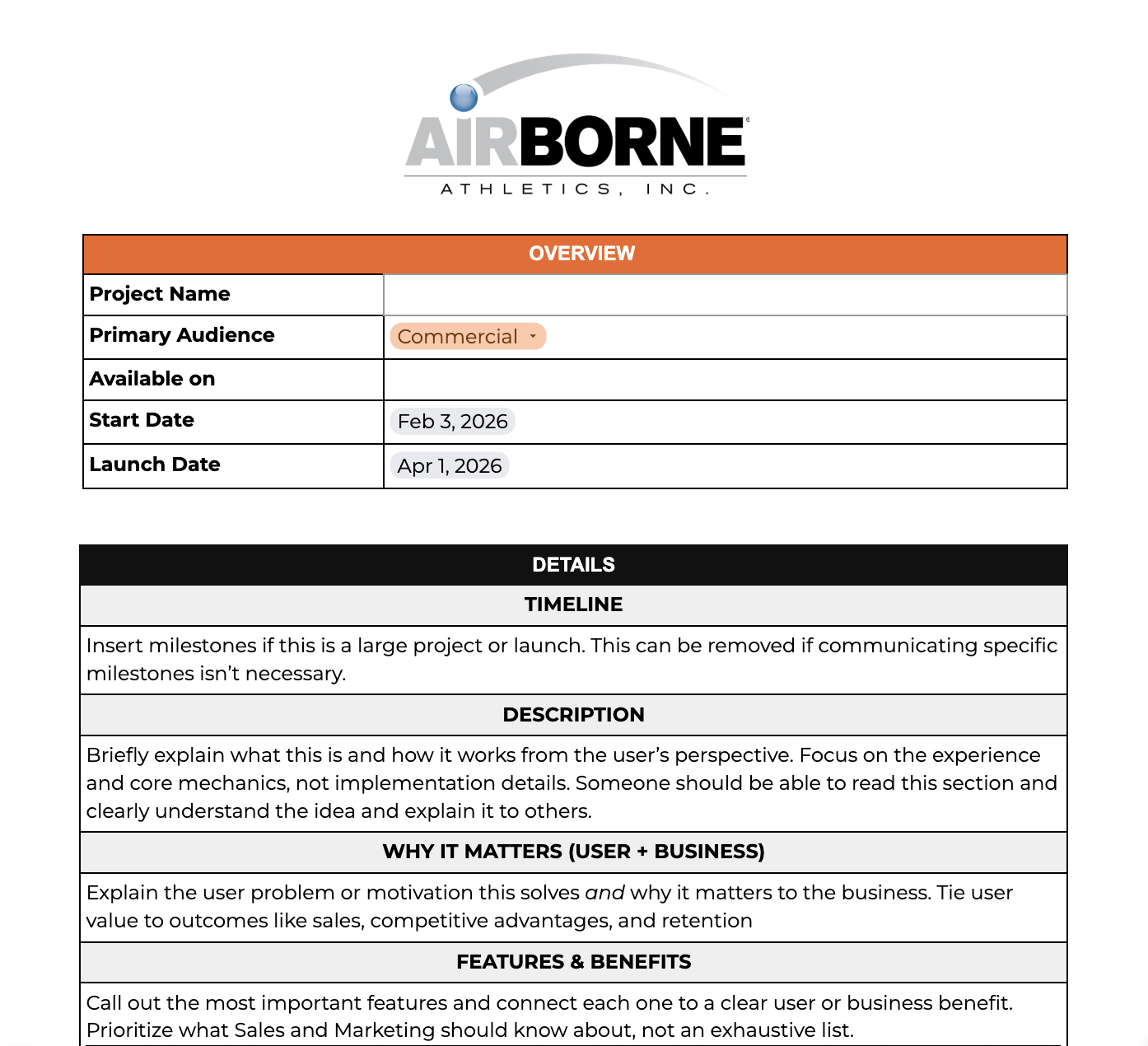
GTM Release Template used to communicate from Product to Sales & Marketing the intent, audience, and features of each new release.
“Going to market” is a big, fuzzy problem, and the hardest part was getting everyone to agree we could be better and commit to working on it together instead of staying in silos.
I chose to anchor the system around a shared GTM calendar because it could serve as a foundation for:
Product roadmap planning
Marketing campaigns and content
Sales goals and offers
Launch timing and sequencing
We also created lightweight templates and recurring meetings to test how we could improve communication and alignment without overloading the teams with process. We intentionally avoided rigid rules at first. The goal was to learn what actually helped and do more of that.
SOLUTION
We built a go-to-market system centered around three things:
GTM Calendar
This mapped the basketball season, key personas, and business priorities into a shared planning tool. It helped us decide not just what to launch, but when it would matter most.
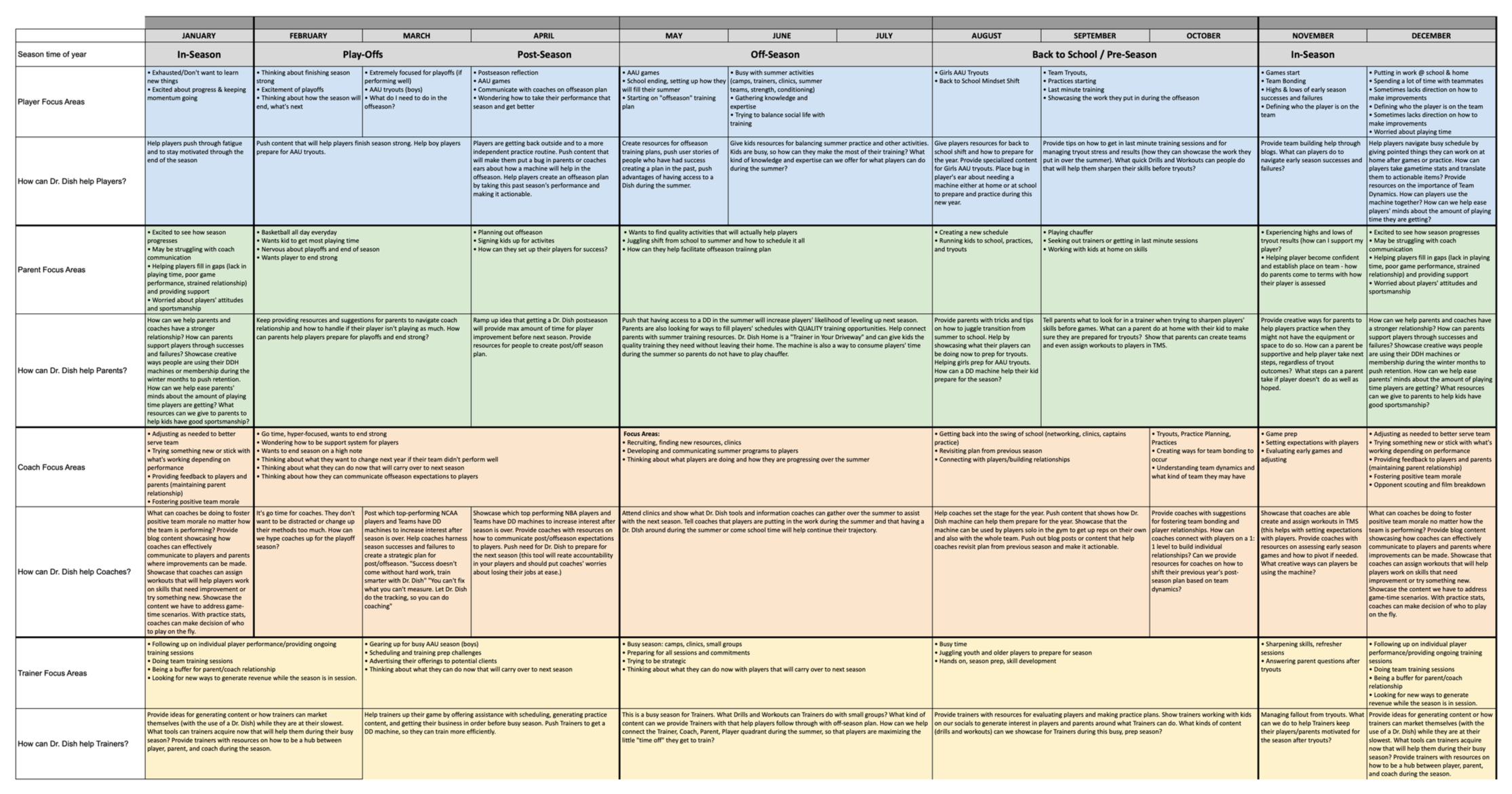
GTM Calendar exploration to understand the different seasons of basketball and what each persona’s needs are during those times, so we can better serve our audience.
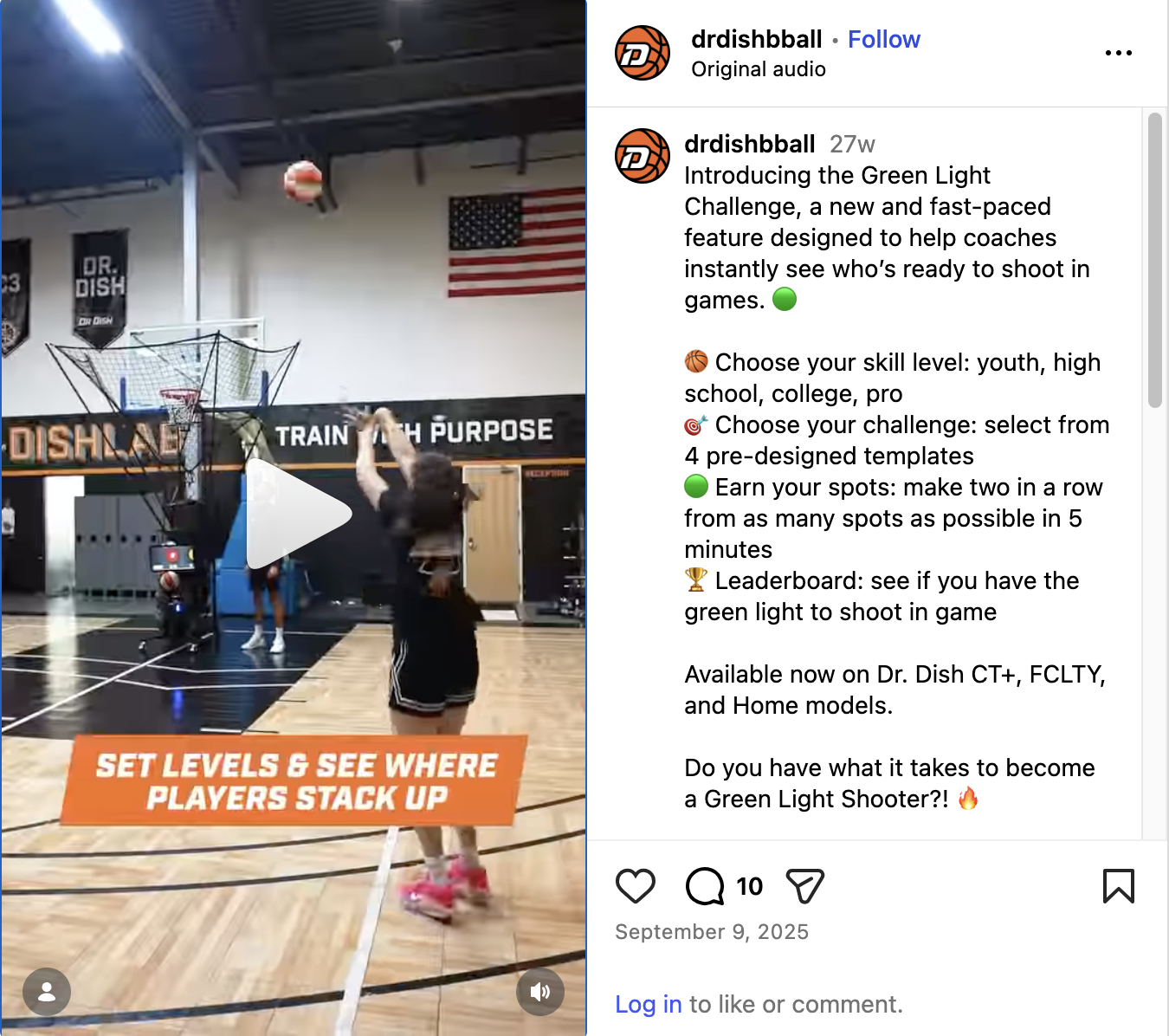
Launch Brief Template
Product filled out a simple brief for each release that included milestones, what we were building, why it mattered, who it was for, features and benefits, and visuals. This gave the entire company a clear window into what was coming and helped Marketing and Sales prepare much earlier and more thoroughly.
Bi-Weekly GTM Sync
We created a recurring meeting where Product, Sales, and Marketing shared updates, timelines, metrics, visuals, and customer feedback. This became an anchor that kept everyone aligned and moving together.
We also got Product more involved in demo videos and internal enablement. Since we knew the features best, it made sense for us to help explain them. I supplemented this with surveys to understand what parents and coaches struggled with throughout the year, so releases and content stayed relevant to real needs.
The main tradeoff was time. More meetings, more artifacts, and more coordination. But that investment paid off in faster launches, fewer surprises, and much better alignment across teams.
RESULTS
The GTM calendar and launch brief template were used across 15+ releases
Both tools evolved over time and became core operating artifacts
Sharing milestones and dependencies actually helped us launch faster, not slower
Product, Sales, and Marketing stayed aligned on what was launching, when, and why
For the business, this meant we stopped throwing features and campaigns into the void and started being deliberate about timing, messaging, and audience. For users, it meant they heard about features and content when it actually mattered to them, not just when we happened to finish building something.
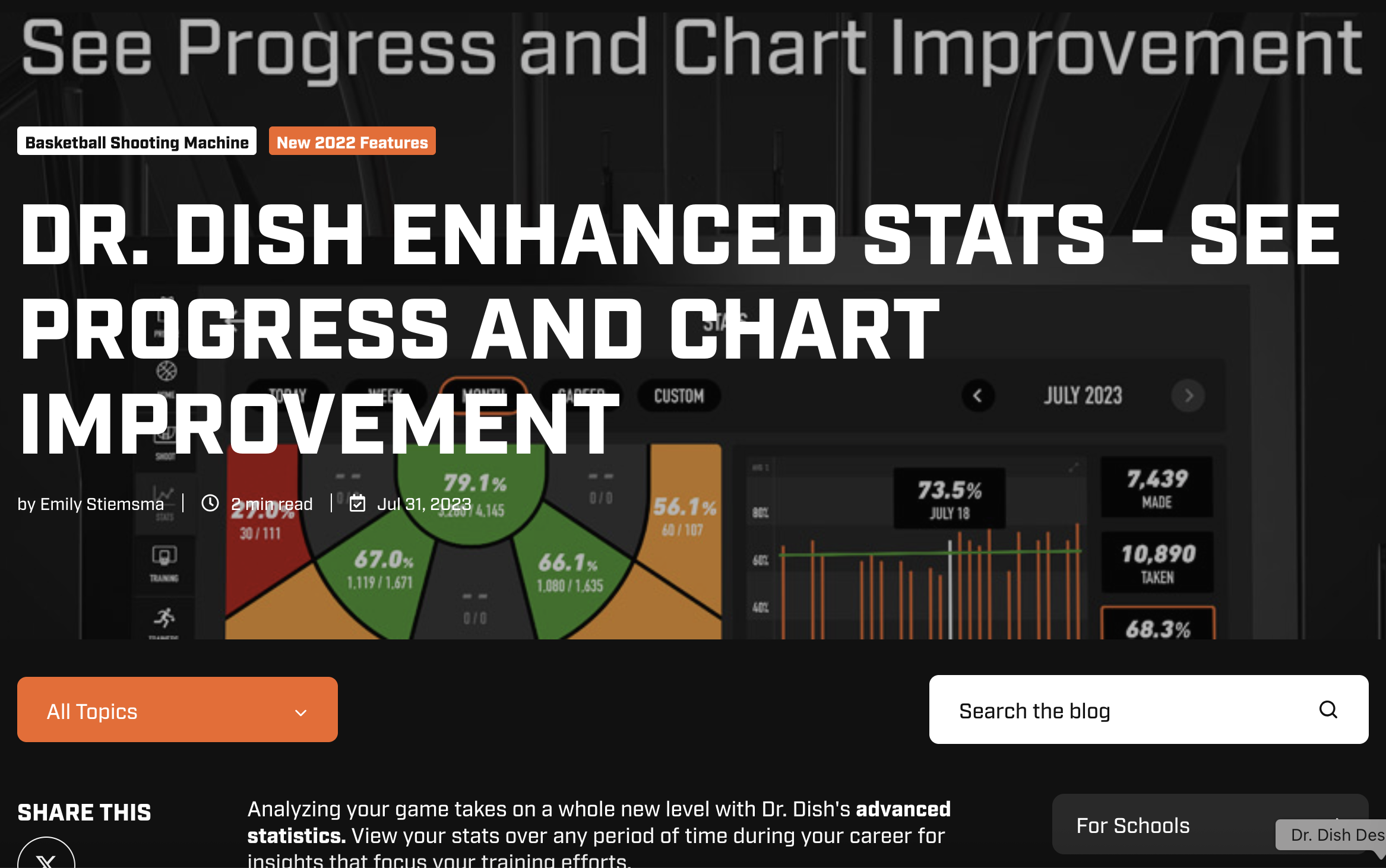
Blog written about a new feature allowing players to view their stats. This blog was written using the information provided in the GTM Release Template.
MY ROLE
I owned this work end-to-end, including:
Researching the basketball season and persona needs
Building the GTM calendar from scratch
Creating and maintaining the launch brief template
Representing Product in cross-functional planning
Conducting surveys to inform seasonal content and launches
Filming customer-facing and internal demo content
I acted as the connective tissue between Product, Sales, and Marketing, translating user needs and product intent into clear plans, timelines, and narratives that each team could actually use.
WHY I’M SHOWING THIS WORK
This case study shows how I build systems that help teams operate better together, not just ship individual features. I spot breakdowns in how organizations plan and communicate, then design lightweight processes that create clarity, alignment, and momentum.
It highlights that I:
Think in systems, not just projects
Bridge product, sales, and marketing effectively
Use user and market context to drive timing and strategy
Build operating rhythms and artifacts that scale
Turn ambiguity and misalignment into shared direction
Details have been intentionally generalized or modified to respect confidentiality and intellectual property agreements. This case study focuses on my role, process, and decision-making rather than proprietary implementation details.