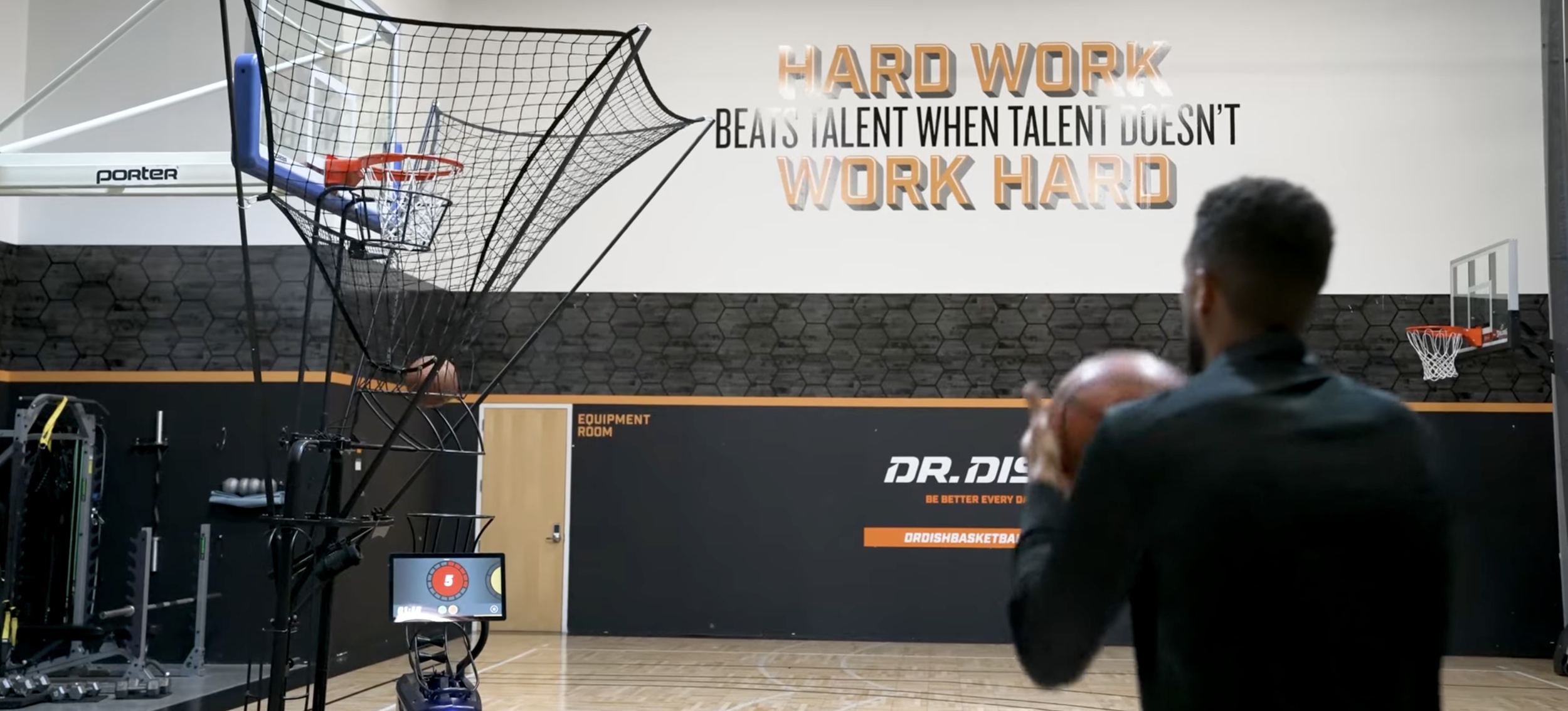
Designing training that actually shows up in games
Problem: Players were getting reps but struggling to perform under real game pressure
What I focused on: Understanding how to elevate training behavior so players are practicing with consequence
What changed: Shifted the product from “more reps” to “better reps” through pressure-based training features
My role: Research strategy & execution, design management, feature definition, go-to-market plan
PROBLEM
Shooting machines have always helped basketball players get volume in practice, but games expose a different problem. When the crowd gets loud and the pressure grows, players hesitate, force shots, or shrink when they are needed most. Teams lose because players struggle to adapt and deliver under stress. Coaches are looking for more ways to encourage players to practice like they play. The increasing interest and demand for these types of training tools and experiences made it clear that this was an opportunity worth exploring.
While shooting with a teammate or coach can be great for skill development, it doesn’t always mimic the pressure created in real game situations
DISCOVER
Through observation, product usage patterns, and conversations with coaches, a clear pattern emerged: players rarely trained in ways that created pressure and forced meaningful decisions under stress. Most training tools focused on either reps or pressure, but rarely both, leaving a gap for a complete training solution.
To kick things off, I facilitated a brainstorming session that generated 40+ pressure-based concepts. Each concept needed to work on existing products and create some form of pressure. I then led a second session that narrowed the list to eight through dot voting.
DEFINE
From there, I ran a kano survey that helped the team cut through the pile of ideas and pick ones that would change how players train, instead of adding complications to training.
Competitive and feedback-driven modes drove the most satisfaction, while more standard, scenario-driven ideas fell a little flat. That clarity helped us focus the roadmap on features that elevate training by making it more fun instead of adding complexity.
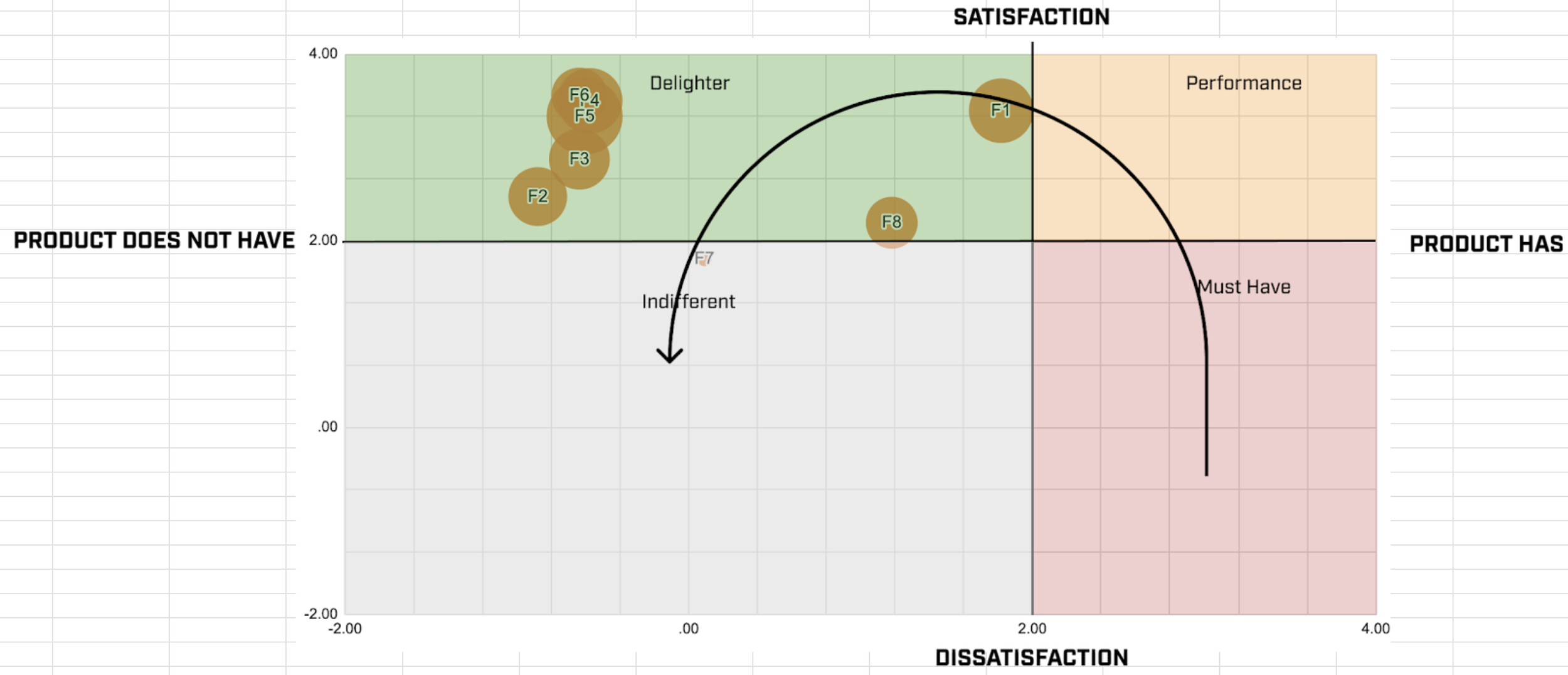
Kano analysis plotting features based on survey results to understand which items were table stakes and which ones were delighters.
SOLUTION
Based on the survey results, we selected a focused suite of three pressure-based modes, balancing user impact, seasonal relevance, and ease of adoption. We prioritized ideas that players and coaches could understand and use immediately over more complex alternatives.
Me vs Me (Spring / Offseason)
Players compete against their personal best in real time, shot for shot. This lets them repeat familiar drills while instantly seeing whether they’re ahead of or behind their best performance, making solo workouts more competitive, ultimately causing players to use the machines longer and more often.
Knockdown (Playoffs)
A scoring-based game that introduces consequences. The last shot at each location is worth more points, and one location boosts the points of every shot. Players can run the drill repeatedly and track how their scores stack up over time or against others on their team
Green Light Challenge (Pre-Season)
A timed challenge where players must hit two shots in a row to advance. The number of spots “collected” becomes the score, with skill thresholds and weekly and monthly leaderboards, so teammates can compete.
RESULTS
Together, these modes transform the machine from a repetition tool into a decision-making environment where pressure, competition, and consequences are part of every workout. Since launch, players have taken millions of shots using these pressure-based modes.
These features have become:
A core part of how players train under pressure
A go-to story and value prop for Sales
A key differentiator for us in the marketplace, with no other competitors offering anything similar
More importantly, they shifted the product from helping players get more reps to helping them get better reps.
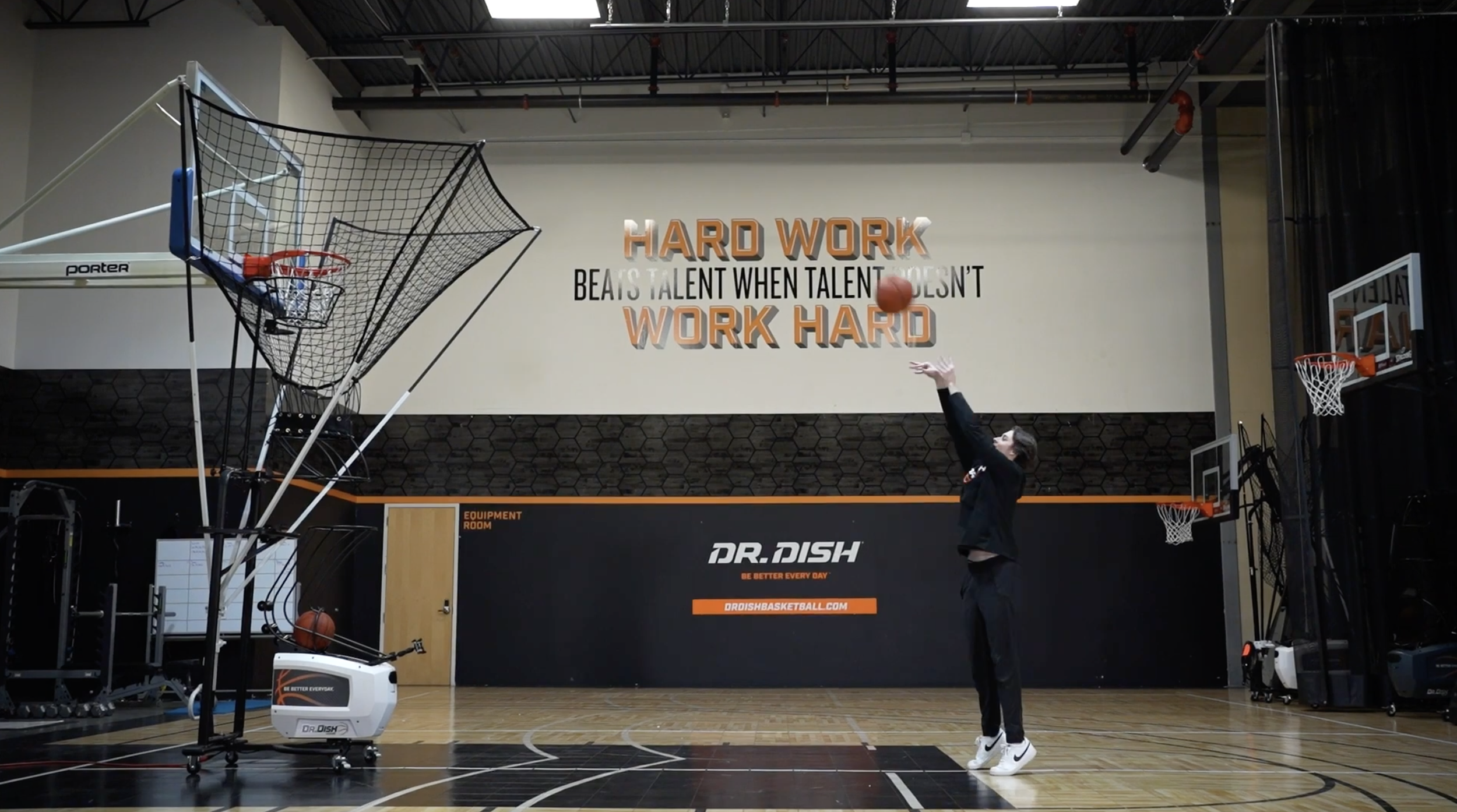
Player taking shots on me vs me game mode. This mode allows players to compete with their own personal bests.
MY ROLE
Led concepts from “pie in the sky” ideas to validated features by facilitating ideation, narrowing the field, designing the research approach, running survey analysis, and presenting findings to drive prioritization
Owned the design process (not the hands-on design) by defining requirements and scope, setting timelines, running design reviews, and partnering with design and engineering to keep quality high and scope realistic
Tested new builds as we got closer to launch, to make sure features worked as intended and to surface usability issues and edge cases early
Partnered with Sales and Marketing in weekly go-to-market syncs to align messaging, timing, and enablement so features weren’t just built, but genuinely understood and used
WHY I’M SHOWING THIS WORK
I’m sharing this because it shows how I take fuzzy, high-level ideas and turn them into products that bring real value to players. I got these things done by:
Identifying the core problem behind surface-level symptoms
Using research and structured frameworks to make decisions
Leading teams from early concept through validation, delivery, and launch
Balancing innovation with practicality to ship features that consistently get used
Partnering across design, engineering, sales, and marketing to drive an impactful GTM strategy
Details have been intentionally generalized or modified to respect confidentiality and intellectual property agreements. This case study focuses on my role, process, and decision-making rather than proprietary implementation details.